Carbon Steel Bars
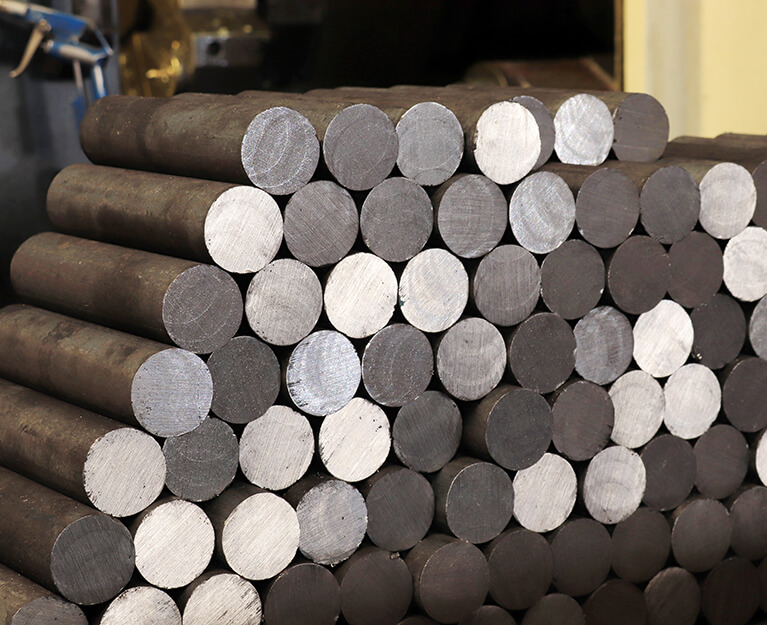
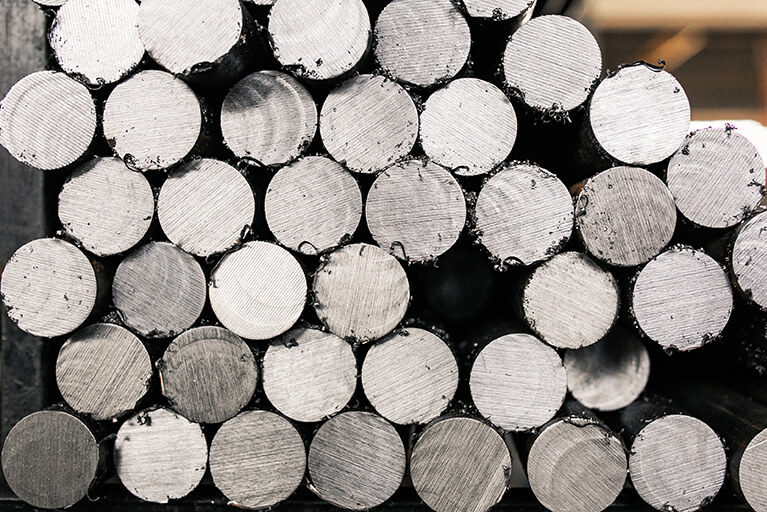
Cold-Finished Carbon Steel Bars
Cold-finished carbon steel bars undergo cold drawing, turning, grinding, and polishing to improve dimensional accuracy, surface finish, straightness, and mechanical properties.
Characteristics:
- Higher Strength & Hardness:Cold working increases strength and hardness through strain hardening.
- Improved Surface Finish: Smoother, cleaner, and more uniform than hot-rolled carbon steel.
- Better Dimensional Accuracy: Tighter diameter tolerances and greater consistency than hot-rolled bars.
- Improved Machinability:Reduced scale and surface defects support cleaner, more efficient machining.
- Reduced Internal Stresses:Stress-relieved options help minimize warping and distortion during machining.
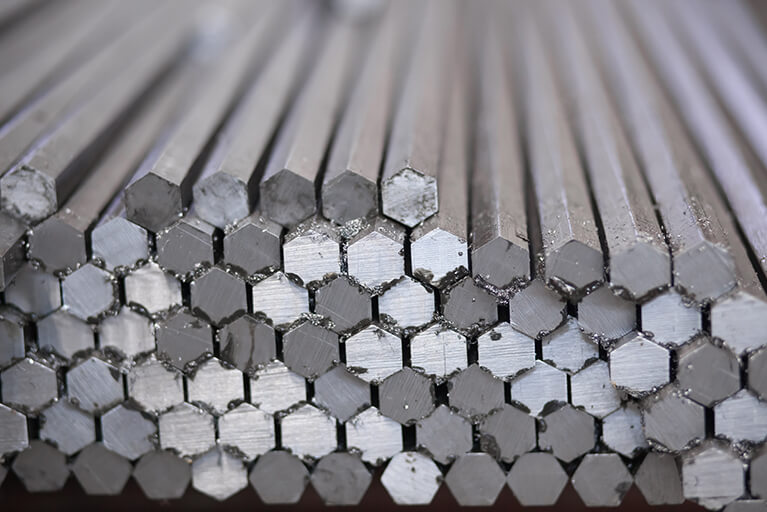
Common Grades of Cold Finished Carbon Steel:
- 1018: Low-carbon steel with excellent weldability, formability, and machinability.
- 1045: Medium-carbon steel offering greater strength and hardness for shafts, axles, and gears.
- 1144 (Stressproof®): High-strength, stress-relieved steel with excellent machinability and dimensional stability.
- 12L14: Leaded free-machining steel designed for high-speed precision machining.
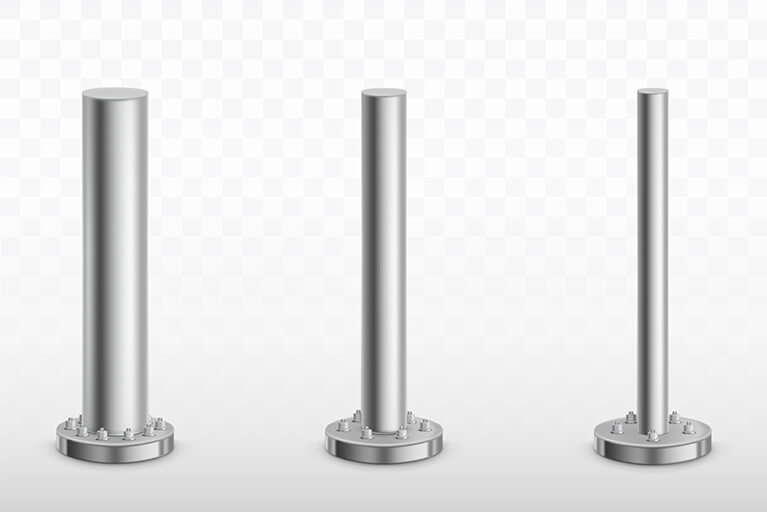
Common Applications:
- Shafts, axles, pins, and fasteners
- Structural and fabricated components
- Gears, bolts, and precision machine parts
Precision Ground Bars
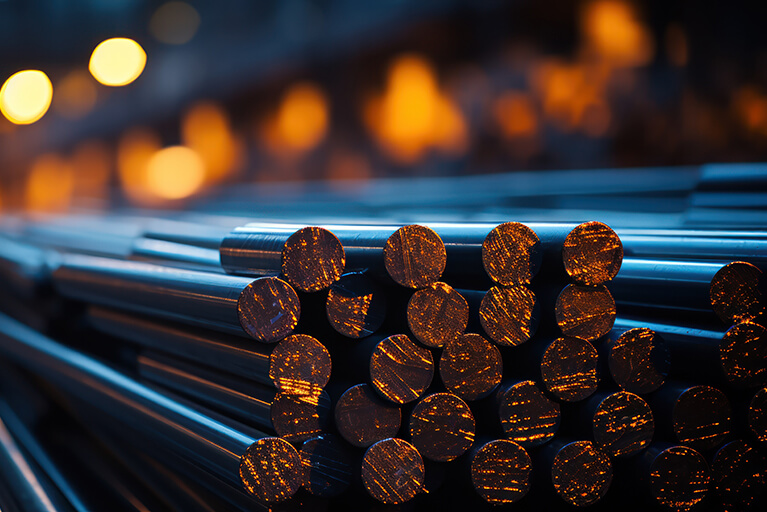
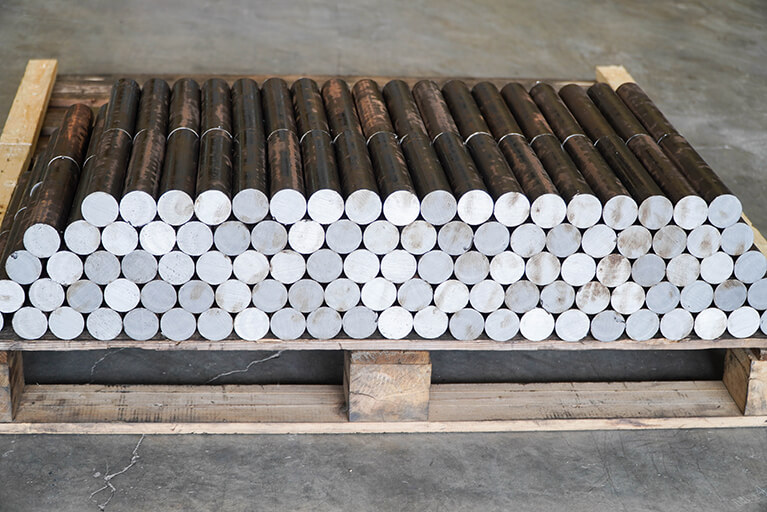
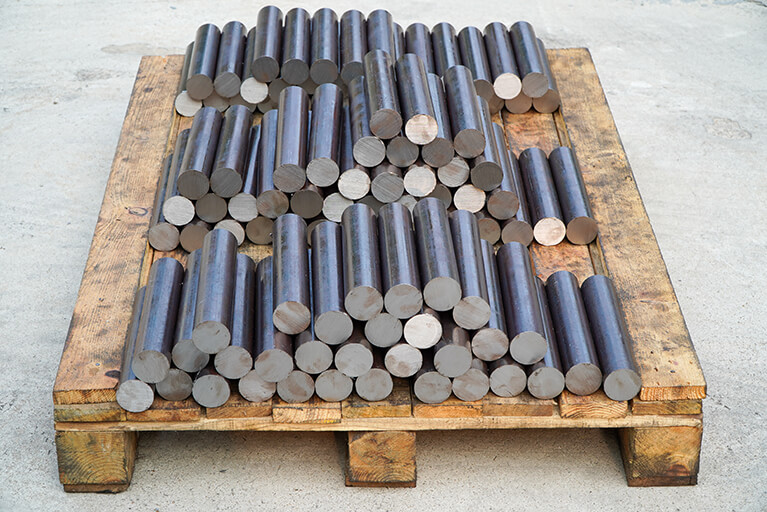
Precision ground bars are steel bars that have undergone additional grinding operations to achieve extremely tight tolerances and high surface finish.
Characteristics:
- Ultra-Precise Tolerances: Often held to ±0.0005” or better.
- Superior Surface Finish: Achieved through centerless grinding.
- Straightness & Roundness: Ideal for precision applications.
- Low Friction: Smooth surface reduces wear in moving applications.
Common Grades of Precision Ground Bars:
- 1018 Carbon Steel: General-purpose low-carbon steel, good for precision machining.
- 1045 Carbon Steel: Higher strength and wear resistance, often used for shafts.
- O1 & A2 Tool Steel: Precision ground for tooling applications.
- 4140 Alloy Steel: Good strength, toughness, and wear resistance.
Common Applications:
- Precision shafts and rods
- Linear motion components
- Guide rails
- Die and mold components
Carbon steel is classified into different grades based on its carbon content and additional alloying elements. The main categories of carbon steel grades are:
Low Carbon Steel (Mild Steel)
- Carbon Content: 0.05% – 0.30%
- Properties: Soft, ductile, weldable, and easy to machine.
Common Grades:
- A36 – Structural steel used in construction and fabrication.
- 1010, 1018, 1020 – Mild steels used in automotive, machinery, and general manufacturing.
Medium Carbon Steel
- Carbon Content: 0.30% – 0.60%
- Properties: Higher strength and wear resistance, with lower ductility and weldability.
Common Grades:
- 1040, 1045 – Used for shafts, axles, gears, and structural components.
- 1144 (Stressproof®) – Offers excellent machinability, strength, and fatigue resistance.
High Carbon Steel
- Carbon Content: 0.60% – 1.00%
- Properties: High hardness, strength, and wear resistance with reduced ductility.
Common Grades:
- 1095 – Used in knives, springs, and cutting tools.
- 1060, 1075, 1080 – Used for blades, automotive components, and high-strength wires.
Ultra High Carbon Steel
- Carbon Content: 1.00% – 2.00%
- Properties: Very hard, brittle, used in specialized applications.
Common Grades:
- W1, W2 – Tool steels, knife blades, and cutting tools.
Alloying Elements in Carbon Steel
- Manganese (Mn): Improves hardness and strength.
- Silicon (Si): Enhances strength.
- Sulfur (S) & Phosphorus (P): Can reduce toughness but improve machinability in some cases.
Carbon Steel Applications
- Low Carbon Steel: Structural beams, automotive panels, pipes.
- Medium Carbon Steel: Shafts, gears, railway tracks.
- High Carbon Steel: Springs, knives, wear-resistant tools.
- Ultra High Carbon Steel: Tool steels, specialized applications.