What Is the Best Steel Grade for Hydraulic and Pneumatic Shafts?
April 24, 2026
How Precision Ground Bar Tolerances Affect CNC Swiss Work
May 12, 2026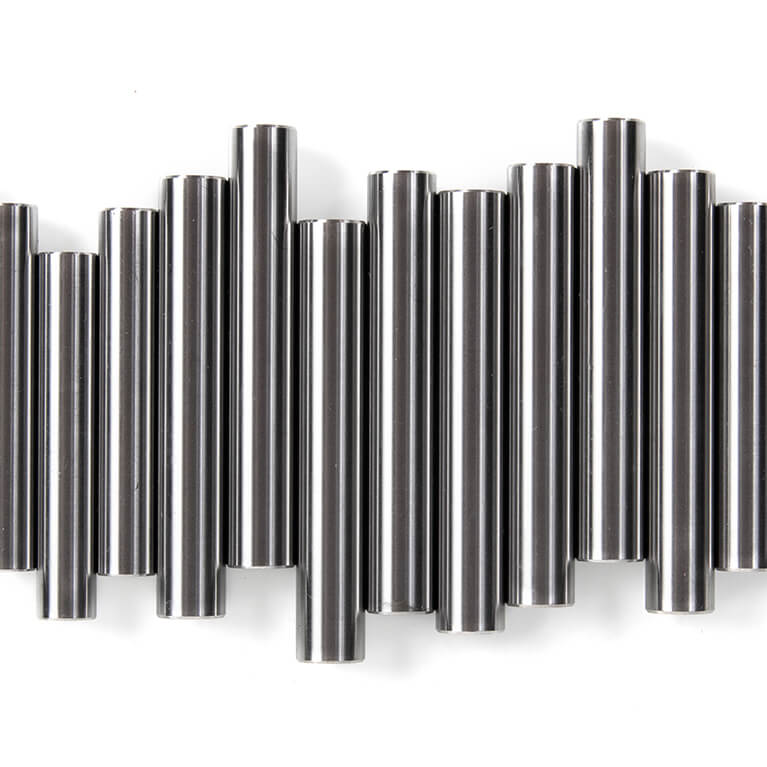
Choosing the right stainless steel grade before you start machining saves tool life, reduces scrap, and protects your finished parts in service. The wrong grade fights your machine. The right one cooperates with it. Grade selection comes down to three things: how freely the material cuts, what tolerances your part needs, and what environment it will live in.
We have been supplying precision-ground stainless steel round bars to CNC shops, engineers, and procurement teams in the Chicago area for over 30 years. Every bar we ship goes through cold drawing, centerless grinding, polishing, and inspection. That process matters as much as the grade itself, and we will explain why as we go through each option.
Stainless Steel Grades for CNC Precision Machining: A Practical Buyer’s Guide
Not every stainless grade behaves the same at the spindle. Some cut freely and protect tool life across long runs. Others work harden more aggressively and demand tighter process control. Knowing where each grade fits helps you make the right call before material arrives at your dock.
Our stainless bars are centerless ground to h6, h7, or h8 tolerance classes with a surface finish of Ra 0.2 to 0.8 µm. Starting from a bar that is already on dimension and straight removes a major source of variation before your first tool path runs. That consistency matters whether you are running a Swiss machine, a CNC lathe, or a multi-spindle setup.
Grade 303: The First Choice for High-Volume Precision Turning
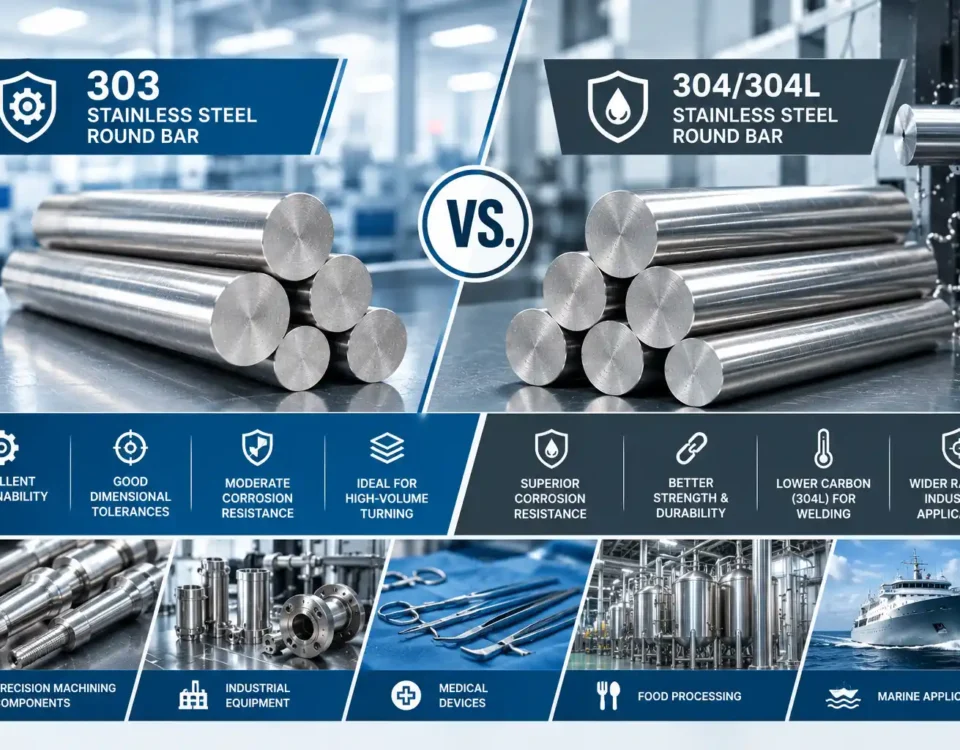
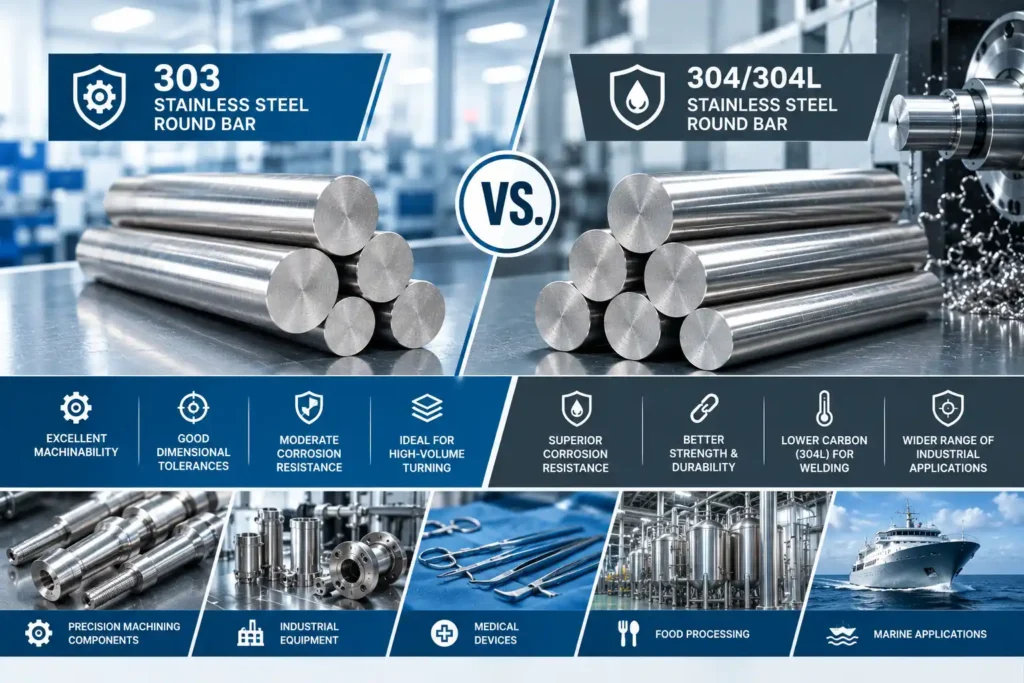
Grade 303 is the most machinable stainless steel we carry. The sulfur addition promotes clean chip breaking and reduces tool wear compared to 304 or 316. On a Swiss machine running high part counts, that difference adds up across an entire production run and keeps your tooling costs in check.
The trade-off is corrosion resistance. Grade 303 gives up some protection compared to 304 because of that sulfur content. For precision components that operate in mild, indoor environments, that trade-off is usually acceptable. When the service environment is wet or chemical, you will need to move to a different grade.
Grade 304 and 304L: Reliable Performance Across General CNC Work
Grade 304 is the most widely used austenitic stainless steel for good reason. It handles food processing, architectural, and general industrial environments without issue. It is not as free-cutting as 303, so sharp tooling and proper feeds matter more here, but it rewards you with broader corrosion resistance across a wider range of applications.
Grade 304L is the low-carbon version of 304. When your parts will be welded after machining, 304L reduces the risk of carbide precipitation at the heat-affected zone. If welding is part of your downstream process, specifying 304L instead of standard 304 is a simple decision that protects part integrity.
Grade 316 and 316L: When the Service Environment Is Aggressive
Grade 316 adds molybdenum to the 304 base, and that addition pushes corrosion resistance significantly higher. Marine environments, chloride exposure, chemical processing, and medical applications all favor 316 over 304. The material work-hardens a bit more at the spindle, so coolant management and tooling selection carry more weight with this grade.
Grade 316L follows the same logic as 304L. Lower carbon content protects weld integrity when post-machining fabrication is involved. If your shop regularly machines parts that head into aggressive service environments and then get welded, 316L covers both concerns at once.
Grade 321: Stability for High-Temperature Aerospace Applications
Grade 321 is a stabilized austenitic grade with added titanium. That titanium prevents sensitization when the material cycles through elevated temperatures in service. Aerospace components, exhaust systems, and industrial parts that see repeated heat exposure are the most common applications for this grade.
Machinability is close to 304. The titanium addition does not significantly change how the material behaves at the spindle. What it does change is the long-term performance of the finished part when heat is a factor in service. For aerospace and defense customers with strict service requirements, 321 is worth specifying.
Grades 410 and 420: Hardness and Wear Resistance First
Grades 410 and 420 are martensitic stainless steels. They are hardenable, magnetic, and built for applications where strength and wear resistance come before maximum corrosion resistance. Valves, pumps, and surgical instruments are common homes for these grades because they can be heat-treated to achieve high surface hardness after machining.
Grade 420 pushes hardness and wear resistance higher than 410. Both grades machine well in the annealed condition before heat treatment. If your application requires a part that holds a sharp edge or resists surface wear under load, these two grades give you options that the austenitic family cannot match.
Grade 440C and 17-4 PH: Maximum Hardness and High Strength
Grade 440C achieves the highest hardness of any stainless grade we carry. Bearings, blades, and precision tooling components are where this grade performs best. It machines well before hardening and holds its edge in service, making it the right choice when wear resistance is the primary requirement.
Grade 17-4 PH is a precipitation hardening grade that combines high strength with solid corrosion resistance. Aerospace, defense, and medical device applications rely on it because that combination is hard to achieve with standard austenitic grades. If your application demands both strength and corrosion performance, 17-4 PH is worth a close look.
Grades 2205 and 2507 Super Duplex: Strength and Corrosion Together
Grade 2205 is the standard duplex choice for oil and gas, marine, and chemical applications. Duplex grades combine austenitic and ferritic microstructures, which deliver strong resistance to stress corrosion cracking alongside good mechanical performance. When 304 or 316 would degrade too quickly, 2205 is a well-proven step up.
Grade 2507 Super Duplex goes further for the most demanding environments. Superior corrosion resistance makes it the right call when extreme conditions are involved, and standard grades simply cannot hold up. Both 2205 and 2507 are available as precision-ground round bars, and our team can help you confirm which grade fits your application.
Why Precision Grinding Makes Every Grade Perform Better
Every stainless bar we supply goes through cold drawing, precision centerless grinding, polishing, and inspection before it ships. That sequence delivers consistent h6, h7, or h8 tolerance and a surface finish of Ra 0.2 to 0.8 µm across every bar. For Swiss machines and high-precision CNC setups, that starting consistency removes a significant source of variation before your first cut.
We also offer Precision Ground Bars, Ground and Polished Bars, Turned Ground and Polished Bars, Bearing Shaft Quality Bars, and Pump Shaft Quality Bars, depending on your application requirements. Value-added services, including straightening, chamfering of bar ends, and cutting to specified lengths, mean your stock arrives ready to run. Most of our materials are domestically sourced, and our stainless steel line is compliant with DFARS, REACH, and RoHS requirements.
Get the Right Stainless Bar for Your Next CNC Job
We stock a full range of stainless steel precision-ground round bars at our facility in Palos Hills, IL, and we serve CNC shops and manufacturers across the Chicago area. Whether you know exactly which grade you need or want to talk through the options first, our team is ready to help. Precision in Every Shape and Size is not just a tagline for us. It is how we approach every order.
Our bars are ground to h6, h7, or h8 tolerance classes with Ra 0.2 to 0.8 µm surface finish, and we back every shipment with over 30 years of experience in precision grinding and steel distribution. Submit a quote request, call us directly, or send us an email, and we will get back to you promptly. We are available Monday through Friday and on Sundays from 7 AM to 5 PM.
Call: (708) 400-7217 Email: sales@precisiongroundmetals.com Submit your quote at precisiongroundmetals.com
FAQs
Which stainless grade machines most easily machined on a CNC or Swiss machine?
Grade 303 is our most machinable option. The sulfur addition promotes clean chip breaking and reduces tool wear on high-volume precision runs.
What tolerances do your precision-ground stainless bars come in?
Our stainless bars are centerless ground to h6, h7, or h8 tolerance classes with a surface finish of Ra 0.2 to 0.8 µm.
What is the main difference between 304 and 316 for machined parts?
Both offer good corrosion resistance. Grade 316 adds molybdenum for superior performance in marine, chloride, and chemical environments where 304 would degrade faster.
Do you offer finishing or cutting services with stainless bar orders?
Yes. We offer straightening, chamfering of bar ends, and cutting to custom lengths alongside all stainless steel precision-ground bar orders.