Stainless Steel 304 vs 316: Which Grade Performs Better in Corrosive Environments?
April 17, 2026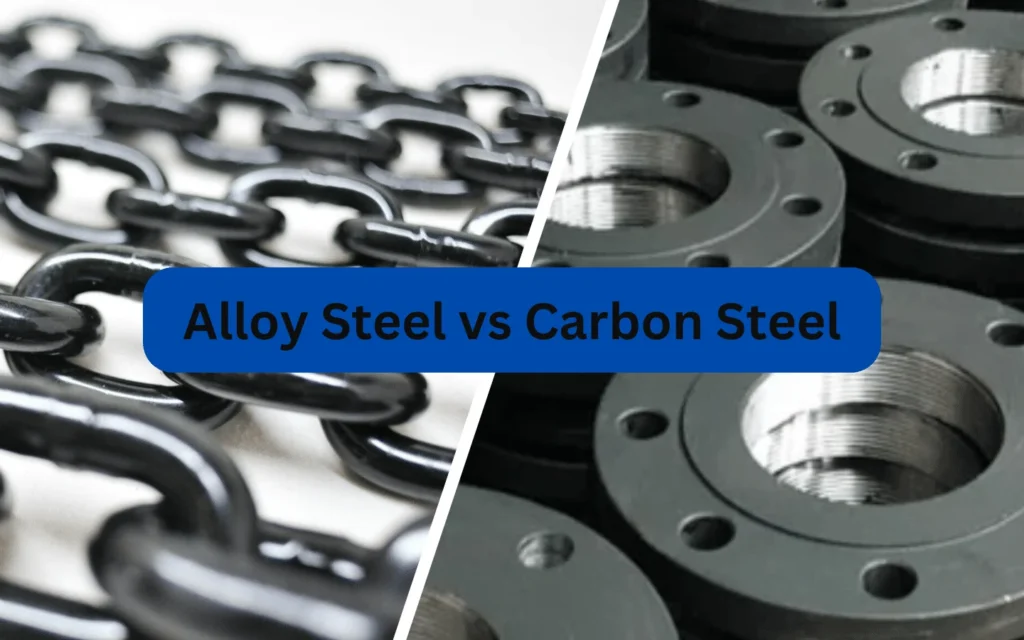
Most engineers and buyers we work with know both materials well. The real question is fit, not familiarity. Alloy steel and carbon steel both show up in aerospace, automotive, and hydraulic applications, but they solve different problems.
After 30 years of supplying and grinding precision bar stock from Palos Hills, Illinois, we’ve helped hundreds of teams make this call. This guide gives you a clear, practical framework to choose correctly the first time.
Choosing the Right Steel for Your Precision Ground Bar Application
Both materials can be ground to tight tolerances. Both serve demanding industries. The difference comes down to what your application actually puts the bar through: load, wear, fatigue, and environment all matter here.
Understanding where each material performs best saves you from over-specifying or under-specifying your next order. Let’s walk through each one clearly so you can decide with confidence.
Carbon Steel: Two Forms, One Important Distinction
We carry carbon steel in two product forms. Cold Finish bars go through cold drawing, turning, grinding, and polishing to improve dimensional accuracy, surface finish, and mechanical properties. Common grades include 1018, 1045, 1144 Stressproof, and 12L14, covering shafts, axles, fasteners, and gears.
Precision-ground carbon steel goes further, held to ±0.0005 inch or better through centerless grinding. That accuracy level is what linear motion components, precision shafts, and guide rails require. Available grades include 1018, 1045, O1 Tool Steel, A2 Tool Steel, and 4140 Alloy.
Alloy Steel: Built for Harder Demands
Alloy steel adds elements like chromium, molybdenum, and nickel to push performance beyond carbon steel. Our alloy steel precision-ground bars are held to the same ±0.0005-inch or better standard, so precision is not the deciding factor here. Strength, fatigue resistance, and wear performance are.
Grade 4140 is our most requested alloy grade, a chromium-molybdenum steel known for strength, toughness, and wear resistance. Grade 4340 adds nickel for higher fatigue resistance under heavy loads. Grade 52100 is built specifically for hardness and wear, making it a natural choice for bearings and spindles. Alloy steel is also available in flat bars, square bars, and custom-cut lengths.
How to Make the Right Call
If your part is a general shaft, pin, or structural component with tight tolerances but no extreme fatigue or wear demands, Cold Finish or Precision Ground carbon steel in 1018 or 1045 is the practical choice. It machines predictably and meets your tolerance requirements without overcomplicating the spec.
If the application involves high cyclic loading, significant wear, or demanding environments, alloy steel is the right move. A 4340 shaft in an aerospace assembly is there because 1045 simply cannot deliver the fatigue resistance that the application demands.
Finishing Options Available for Both Materials
Whichever material you choose, we offer several finished forms beyond standard precision ground. Ground and Polished bars give you a smooth, uniform finish. Turned, Ground and Polished TGP bars improve both dimensional accuracy and surface quality. Bearing Shaft Quality bars are built for high wear resistance in linear motion applications.
Pump Shaft Quality bars are designed for demanding environments where corrosion resistance is critical. We also straighten bars to strict straightness tolerances, chamfer bar ends for clean, burr-free installation, cut to your custom lengths, and package every order carefully to protect quality during transit. Every service is available alongside your material order.
Compliance and Sourcing for Defense and Aerospace Work
Most of our materials are domestically sourced. We maintain compliance with DFARS, REACH, and RoHS, which matters when sourcing documentation is part of your procurement process. Specify your compliance requirements in your quote request, and we will handle it directly.
For defense and aerospace supply chains, having a supplier who already meets these standards removes a step from your qualification process. We’ve been doing this for over 30 years and understand what documentation-heavy procurement looks like.
Get the Right Bar Stock for Your Application
Ready to specify your next order? Submit a quote request at precisiongroundmetals.com with your material, tolerance, grade, and any service requirements. Our team will confirm the right fit from our catalog and respond promptly.
You can also reach us directly at sales@precisiongroundmetals.com or call (708) 400-7217. We’re located at 8150 W 111th St, Suite 14, Palos Hills, IL 60465. Our team is available Monday through Friday and Sunday, 7 AM to 5 PM. Precision in Every Shape & Size. Your Round Bar Experts. That is what we are here to deliver.
FAQs
Q1: What alloy steel grades do you carry in precision-ground form?
We carry 4140, 4340, 8620, 4130, 6150, 52100, H13, and D2, all precision ground to ±0.0005 inch or better.
Q2: What is the difference between Cold Finish and Precision Ground carbon steel?
Cold Finish improves accuracy through cold drawing and polishing. Precision Ground achieves ±0.0005 inch or better via centerless grinding for tighter applications.
Q3: Do your materials meet DFARS, REACH, and RoHS requirements?
Yes. We maintain all three compliance standards. Most materials are domestically sourced. Include compliance requirements in your quote request.
Q4: Can alloy steel bars be ordered in shapes other than round?
Yes. Alloy steel is available in round bars, flat bars, square bars, and custom-cut lengths.