
Which Copper Grade Is Best for High-Precision Electrical Machining Applications?
May 25, 2026
How Bar Straightening Affects Tolerances and Output Quality in CNC Production Runs
June 25, 2026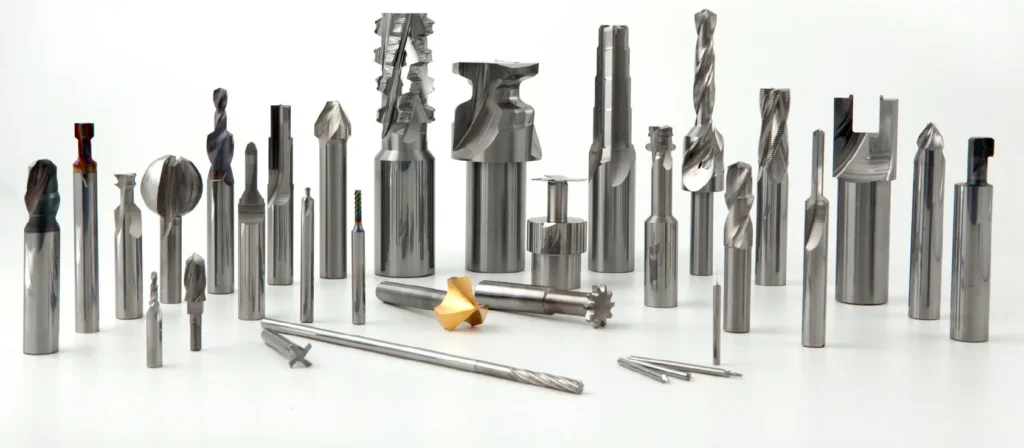
When tooling runs hot on every cycle, the steel you choose either survives or fails. Die casting dies, forging dies, and injection molds all share one demand. They need a grade that holds its shape and hardness under sustained heat. H13 was built exactly for that. Most other grades simply weren’t.
Choosing the wrong grade costs you more than a failed tool. It costs you downtime, rework, and shortened production runs. H13 sits in the hot-work classification for a reason. It handles thermal cycling that breaks down cold-work grades fast. Precision in Every Shape & Size means getting that grade decision right before the job starts, not after.
H13 Is a Hot-Work Tool Steel Built for Heat, Pressure, and Tight Tolerances
Tool steel is not a single material. It is a large family of grades, each designed for specific conditions. H13 belongs to the hot-work group, which means it holds hardness and resists deformation at temperatures where cold-work grades like D2 or O1 would lose dimensional stability. That classification shapes every decision a toolmaker makes.
Cold-work grades perform well at or near room temperature. They excel at punching, blanking, and shearing. But once sustained heat enters the picture, those grades are working outside their design range. H13 is not a substitute for cold-work grades. It is the right tool for a completely different set of conditions.
How H13 Handles Die Casting Demands
Die casting puts tooling through one of the most punishing thermal cycles in manufacturing. Molten metal hits the die surface, transfers heat rapidly, and then cooling pulls that heat back out. That expansion and contraction repeat thousands of times. Grades that lack heat resistance develop surface cracks that ruin part quality and shorten tool life.
H13 keeps the die surface stable through repeated cycles, which means better part surface quality and more shots before rework is needed. For automotive and aerospace shops running high volumes, that stability directly reduces your cost per part over the life of the die.
Forging Dies and Extrusion Tooling
Forging adds impact loading on top of thermal stress. The material needs toughness and heat resistance together, not one without the other. H13 handles both, which is why it shows up consistently in forging die specifications across tool and die shops we supply throughout the Chicago area.
Extrusion tooling faces a different but related challenge. Heat transfers from the workpiece into the die continuously throughout the run, not just in quick cycles. H13 absorbs that sustained thermal load without the dimensional drift that causes fit and finish problems in your extruded profiles. That reliability across both impact and sustained heat is what makes it a go-to for demanding tooling programs.
Injection Molds Running Engineering Plastics
When the polymer being processed requires higher melt temperatures, the mold steel has to keep up. P20 and P21 work well for lower temperature polymer applications, but when mold temperatures climb into the range that engineering plastics demand, H13’s heat resistance becomes the deciding factor for tool life.
For mold shops running high cycle volumes, that extended tool life adds up quickly. Fewer interruptions for rework mean more parts per shift and a lower cost per mold cycle over the full production run.
Precision Ground H13 and What It Does for Your Shop
Precision-ground H13 starts your tooling work from a better position. We hold precision ground tool steel to tolerances of ±0.001 inch or better. That tighter starting dimension means less stock removal before you reach your finished size, which saves machining time and gives you more consistent results across your run.
Every bar goes through our Straightening service to meet strict straightness tolerances before it ships. A bar that isn’t running true creates problems the moment it goes into a lathe, grinder, or wire EDM. We also offer Chamfering Bar Ends for clean, burr-free loading, and cutting to custom lengths so your stock arrives ready to use.
H13 in Our Full Tool Steel Lineup
H13 is one grade in a broad catalog we carry at our Palos Hills, IL, facility. Our tool steel offering covers oil-hardening grades O1 and O2, air-hardening grades A2, A6, and A8, high speed grades M2, M4, T1, and T15, shock-resisting grades S1, S5, and S7, hot-work grades H11, H13, and H21, cold-work grades D2, D3, and D5, and plastic mold grades P20 and P21.
That range covers most tooling applications from one supplier, which simplifies your procurement process considerably. Beyond tool steel, we supply stainless steel, alloy steel, carbon steel, aluminum, brass, bronze, copper, and titanium in round bar and precision-ground forms. Most of our materials are domestically sourced, and we maintain full compliance with DFARS, REACH, and RoHS on every order.
Find the Right Grade for Your Application?
Call us at (708) 400-7217 or email sales@precisiongroundmetals.com with your diameter, length, quantity, and tolerance requirements. Our team is ready to help Monday through Friday and Sunday, 7 AM to 5 PM.
Visit us at 8150 W 111th St, Suite 14, Palos Hills, IL, or submit your specs through the Request A Quote form at precisiongroundmetals.com. We’ll get back to you promptly with exactly what your application needs.
Frequently Asked Questions
What separates H13 from cold-work grades like D2 and O1?
H13 is a hot-work grade built for sustained elevated temperatures and thermal cycling. D2 and O1 are optimized for cold-work environments near room temperature.
Do you stock H13 as a precision-ground bar?
Yes. We carry precision-ground H13 held to ±0.001 inch or better, ready for die and mold tooling applications.
What services come with a tool steel order?
We offer straightening, chamfering, bar ends, cutting to custom lengths, protective packaging, and shipping directly to your location.
Do you carry other hot-work grades besides H13?
Yes. Our hot-work lineup includes H11, H13, and H21. Contact us with your application details, and we will identify the right grade.