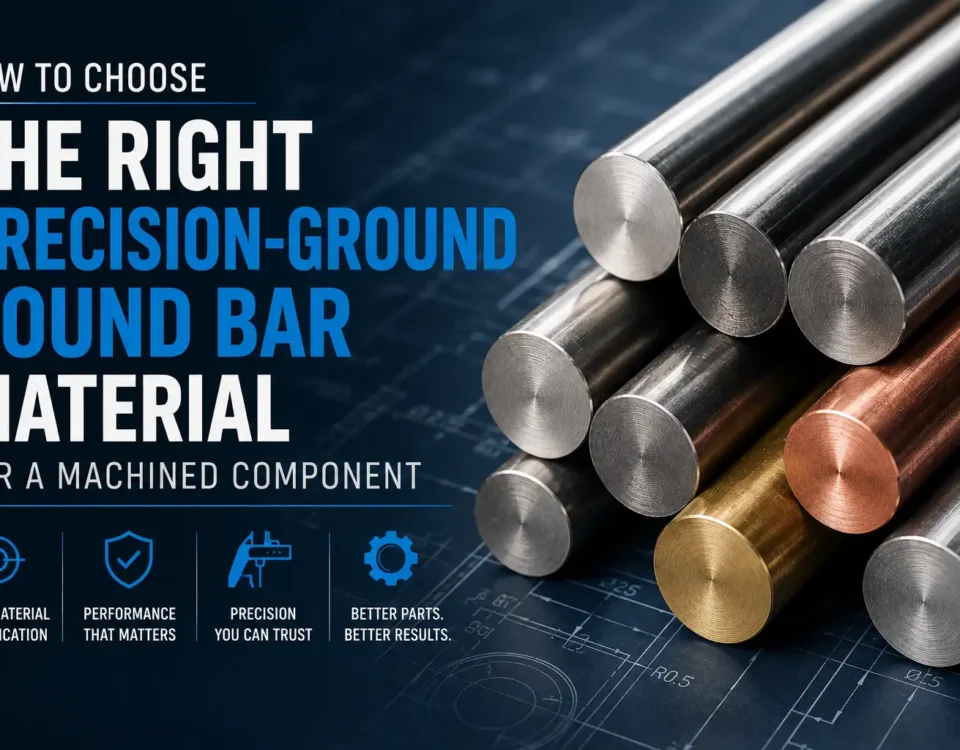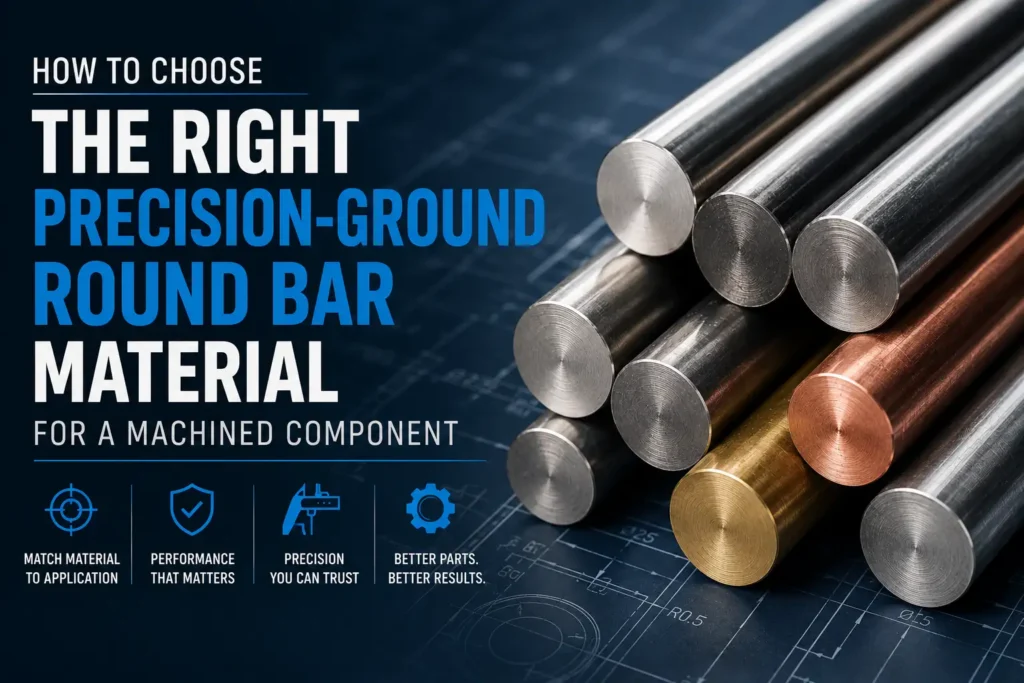
How to Choose the Right Precision-Ground Round Bar Material for a Machined Component
August 31, 2026
When Should You Specify C145 Tellurium Copper Round Bar for Machined Electrical Components?
September 17, 2026
At Precision Ground Metals, Inc., we use the service environment to guide a C360 versus C464 brass round bar decision. When a component operates in a marine setting, we review C464 naval brass first because its high corrosion resistance makes it well suited to demanding marine environments. When precision machining is the main constraint and the environment is less demanding, we review C360 free-machining brass first because its excellent machinability makes it a strong option for precision components.
The repeated title covers two different buyer questions: which alloy fits the environment, and which alloy fits the machining process. We answer both by reviewing component function, fluid exposure, strength, dimensions, tolerance, straightness, surface finish, cut length, quantity, and inspection needs before confirming the bar.
Our marine-first comparison of C464 and C360
C464 contains approximately 60% copper, 39% zinc, and 1% tin. We consider it when a component needs strength, durability, and high corrosion resistance, particularly in marine environments. Typical applications include marine hardware, propellers, shipbuilding components, and heat exchangers.
C360 contains approximately 61.5% copper, 35.5% zinc, and 3% lead. We use it when excellent machinability is a primary requirement. Its free-machining characteristics, good corrosion resistance, and moderate strength make it suitable for precision components, valves, fittings, and fasteners.
When we place C464 first
We place C464 first when saltwater, marine humidity, or another marine service condition controls the material decision. We consider C464 for applications such as marine hardware, propeller-related components, shipbuilding parts, and heat exchangers. We still ask for the exact water, fluid, temperature, load, and maintenance conditions because a general marine label does not define every installation.
We also confirm whether the component is machined, formed, joined, or assembled with another part. If precision machining remains important, we ask for the features that control the process and the inspection points that control acceptance.
When we place C360 first
We place C360 first when repeatable machining and free-machining behavior lead the decision. Its machinability makes it a practical starting point for turned or milled parts, including precision components, valves, fittings, and fasteners, particularly in controlled industrial environments.
We do not substitute C360 for C464 in a marine application without an engineering review. C360 offers good corrosion resistance, while C464 provides higher corrosion resistance, particularly in marine environments. We treat that difference as a meaningful filter when evaluating the service conditions. We treat that difference as a meaningful filter.
Marine service changes the RFQ questions
For a marine component, we ask about saltwater, splash, immersion, humidity, cleaning, storage, and contact with other materials. We also ask whether the part is a shaft-related component, fitting, valve, heat-exchanger part, propeller-related item, or another type of hardware. Those details connect the alloy to the real service condition.
For a precision-machined component, we ask about turning allowance, tool setup, workholding, critical features, surface finish, and inspection method. C360’s machinability description may make it the better first review for that process, but we confirm the complete part requirement before approval.
Precision-ground brass bar specifications
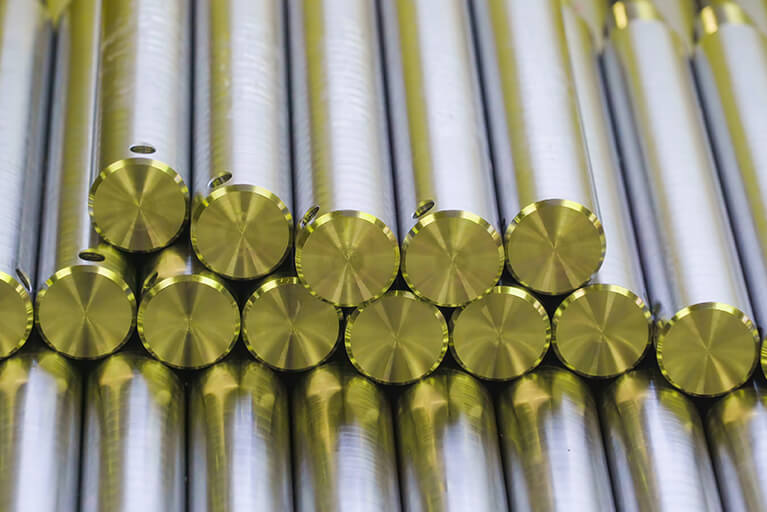
We offer brass round bars in standard and precision-ground forms, with multiple grades, diameters, and cut lengths. Our precision-ground brass bars are centerless ground for tight dimensional tolerances, consistent diameter, straightness, and smooth surface finish. We specify those characteristics separately from the alloy.
Diameter, tolerance, and cut length
We state whether the requested diameter is incoming bar size or finished component size. We also state whether the bar should arrive in fixed cut lengths. For a marine fitting or shaft-related part, a clear incoming dimension helps the turning or assembly team plan the next operation.
Straightness and surface finish
Straightness can influence alignment and workholding. Surface finish can influence friction, sealing, appearance, and later finishing. We place each requirement on the drawing or RFQ instead of relying on a general phrase such as “precision brass.”
Strength and inspection
C464 offers strong, durable performance, while C360 provides moderate strength with excellent machinability. If strength is critical, we request the exact requirement and material condition for confirmation. We also identify dimensional inspection, surface checks, lot information, packaging, and shipping needs before the order is released.
How we handle mixed marine and machining priorities
Some components face marine exposure and require extensive machining. In that case, we do not choose based on one attribute. We compare the corrosion requirement, machining sequence, strength need, dimensional fit, finish, and inspection plan together. We may review C464 as the environment-led option and C360 as the machining-led comparison, then request engineering confirmation before selecting the final alloy.
Brass round bar can also be used for applications such as electrical connectors, automotive and aerospace parts, plumbing, and architectural hardware. We treat the application as an important starting point, but we do not use it as an automatic material approval. The final choice remains tied to the drawing and service conditions.
What we include in a marine brass quote request
We provide the grade, composition preference, diameter, tolerance, straightness, surface finish, cut length, quantity, component function, marine exposure, strength requirement, machining priority, inspection needs, and delivery instructions. We identify whether the part is for marine hardware, shipbuilding, a propeller-related assembly, a heat exchanger, a valve, or a fitting.
Use our Request a Quote path to submit the drawing and requirements. You can compare other material families through the broader materials page before sending the request.
Final decision
We review C464 brass round bar first when high marine corrosion resistance and durable service control the decision. We review C360 brass round bar first when excellent machinability for precision components is the leading requirement. If both marine exposure and extensive machining matter, we compare the full specification rather than assuming that one grade wins every category.
FAQs
Which grade should you review for marine hardware?
We review C464 first when marine service is the primary concern because it offers high corrosion resistance, particularly in marine environments, and is well suited to applications such as marine hardware.
Which grade should you review for precision-machined fittings?
We review C360 first when machining performance is the primary concern because its free-machining characteristics provide excellent machinability for precision components and fittings.
Is C360 suitable for marine service?
C360 offers good corrosion resistance, but marine service requires a closer review of the actual exposure. We request details about saltwater, immersion, humidity, temperature, and other service conditions before approving it for a specific marine application.
What bar dimensions should you specify?
We specify incoming diameter, tolerance, straightness, surface finish, cut length, quantity, and drawing requirements.
Can brass round bar be centerless ground?
Yes. We offer precision-ground brass round bars with tight dimensional tolerances, consistent diameter, controlled straightness, and a smooth surface finish.
How do you request a comparison?
Send the drawing, environment, grade options, dimensions, quantity, and inspection needs through Request a Quote.